
Ministry of Youth and Sports, Through ARSH, Conducts Training Workshop on Peacebuilding and Conflict Prevention
Ministry of Youth and Sports, Through ARSH, Conducts Training Workshop on Peacebuilding and Conflict Prevention
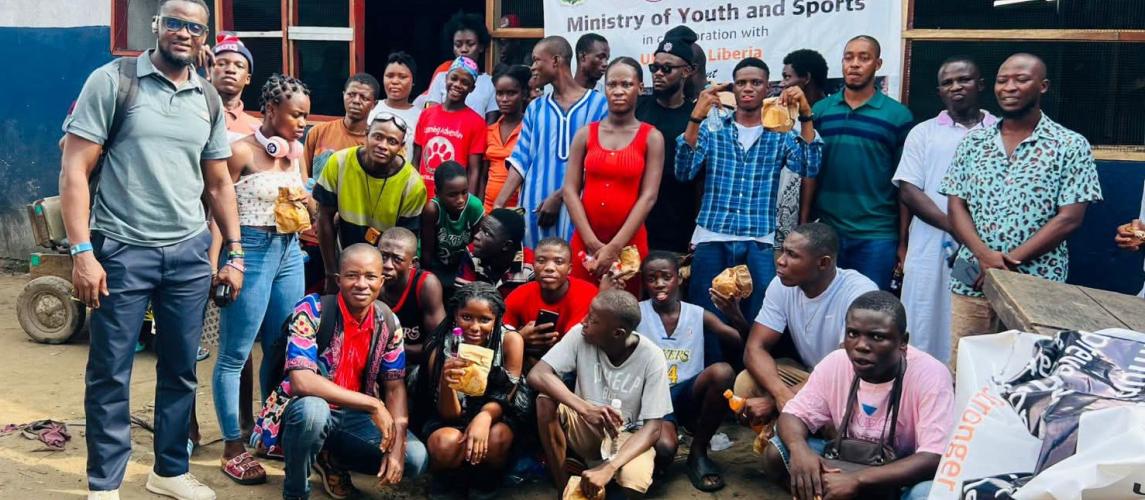
MONROVIA, LIBERIA — September 9, 2026: The Ministry of Youth and Sports (MYS), through its Adolescent Reproductive and Sexual Health (ARSH) initiative, with support from the United Nations Population Fund (UNFPA), has conducted a community-based training workshop on peacebuilding, conflict prevention, conflict resolution, and substance abuse awareness in five communities.
The engagement was held simultaneously on September 6, 2026, across five communities in Montserrado County, including Logan Town, Gbanjor in Jones Town, West Point, New Kru Town, and King Gray, bringing together young people, community leaders, women’s groups, and adolescent girls.
The training forms part of the Ministry’s ongoing efforts to strengthen young people’s knowledge and skills in conflict prevention, peaceful coexistence, effective communication, community dialogue, and healthier decision-making.
Speaking during the engagement, Joseph K. Heneh of LAPS emphasized that peace does not necessarily mean the complete absence of conflict. He explained that peace involves the ability of individuals, families, and communities to manage disagreements peacefully without allowing them to escalate into violence.
Heneh noted that conflict is a natural part of human relationships and may occur between couples, parents and children, friends, and members of communities. However, he cautioned that conflicts can become destructive when they are not properly managed.
He identified effective communication, mutual understanding, respect, and togetherness as important tools for preventing conflict and maintaining peace.
“Even though something may not be completely solved, if we can manage it without causing trouble, that is peace,” Heneh explained.
Using family and economic challenges as examples, participants were encouraged to examine how couples and families can manage financial difficulties without allowing economic hardship to create tension or violence in the home.
Heneh stressed that open communication and mutual understanding can help families identify solutions and maintain peaceful relationships, even during difficult circumstances.
Meanwhile, Alfred Gbagba of Students Against Drug Abuse said the engagement forms part of ongoing community-based efforts to educate young people about conflict prevention, peacebuilding, and peaceful coexistence.
Gbagba emphasized that while conflict cannot be eliminated, individuals and communities can acquire the knowledge and skills necessary to manage disagreements before they become destructive.
“We cannot get rid of conflict, but we can manage it in a way that provides opportunities for people to coexist,” Gbagba said.
He also stressed the importance of responsible communication, warning that misinformation, rumors, and irresponsible messaging can contribute to tension and conflict within families and communities.
Referencing the experience of Rwanda, Gbagba noted that misinformation and irresponsible communication, particularly through influential platforms, can have serious consequences. He therefore urged participants to verify information before sharing it and to carefully consider the potential impact of their words.
According to Gbagba, communication can either promote peace or contribute to conflict, depending on how information is delivered, interpreted, and understood.
A role-play exercise was also conducted to demonstrate how information can become distorted as it moves from one person to another, potentially creating misunderstanding, tension, and conflict.
The training also featured specialized sessions led by community-based facilitators in the Gbanjor Community.
D. Myers Davids of the Gbowee Foundation, who spoke on peacebuilding, encouraged residents to promote unity, reconciliation, mutual respect, and peaceful dialogue. He cautioned against violence, misinformation, and electoral tensions that could undermine peace within communities.
Sampson Dugba of Hope Care Liberia, who addressed conflict resolution, explained that conflicts often begin with minor disagreements but can escalate when they are not addressed early.
He identified land disputes, financial transactions, elections, drug-related activities, gossip, and rumors among common sources of conflict in communities.
Dugba encouraged residents to resolve disputes through peaceful dialogue and community-based mediation, involving elders and community leaders where appropriate before referring serious matters to the police or courts.
The engagement also included a health education session led by Mary B. Sonpon, a nurse from the Gbanjor Community Clinic, who addressed the dangers of substance abuse.
Sonpon highlighted the harmful effects of alcohol, drugs, tobacco, and the misuse of medications on individuals, families, and communities, particularly among at-risk young people.
During the session, several at-risk youths expressed their willingness to discontinue substance use and called for greater access to rehabilitation and vocational training opportunities.
Some participants also appealed for support to overcome stigma and rebuild their lives following rehabilitation.
The training provided participants with opportunities to share their experiences, identify community challenges, and discuss practical approaches to preventing and managing conflict.
The engagement concluded with small-group discussions focused on community challenges and peaceful solutions. Participants were encouraged to respect one another, adhere to agreed community rules, work collectively, and resolve disagreements through dialogue rather than confrontation.
The training was welcomed by Community Chairlady Maureen Geekor and Chairman Sayon Doe, who commended the initiative and the participation of residents.
The Ministry of Youth and Sports appreciates the leadership and residents of the participating communities for their active participation and commitment to promoting peace, youth development, conflict prevention, and healthier communities.
Through the ARSH initiative and its partners, the Ministry remains committed to strengthening community-based awareness, dialogue, education, and youth-centered interventions that promote peaceful coexistence, mutual understanding, and cooperation among young people, families, and communities.
